
British Authorities Arrest Senior U. S. Army Officer for Russian Espionage
-
British authorities have arrested a senior U. S. Army officer on suspicion
of espionage linked to Russia, citing specific violations of the National
Securi...
Union Paradise Blog List
-
-
The (alleged) spy who loved me: the Nvidia scandal - podcast - Global technology editor *Dan Milmo *on the scandal rocking the world of AI: US intelligence believes the lover of Nvidia’s chief executive, Jensen Huang...
-
Brewers' Misiorowski, Yankees' Schlittler unanimous selections as Cy Young winners - Milwaukee's Jacob Misiorowski and the New York Yankees' Cam Schlittler were unanimous Cy Young Award winners Wednesday night after delivering dominant perf...
-
Nvidia CEO Jensen Huang may be ousted after second affair revealed, reports claim - Nvidia CEO Jensen Huang reportedly had an affair with a second woman, with the board considering ousting him from his position.
-
Brewers' Jacob Misiorowski, Yankees' Cam Schlittler named unanimous Cy Young Award winners for 2026 MLB season - Jacob Misiorowski was the first Cy Young Award and World Series winner in the same season since Randy Johnson, while Cam Schlittler's first full season res...
-
Indonesian VP resigns over education qualification row - Indonesia's Vice President Gibran Rakabuming Raka has resigned amid a dispute over his educational qualifications.
-
Prisoner found dead at maximum security Maryland state prison - A prisoner was found dead at North Branch Correctional Institution in Cumberland, Maryland, and two other inmates are suspected of being responsible, accor...
-
What could Chinese intelligence have learned from Nvidia CEO’s affair? - Nvidia says no secrets were compromised, but experts question what sensitive information may have been exposed.
-
Nvidia stock falls 8% after report board is preparing to oust Jensen Huang after second affair - Nvidia stock was down 8% after hours following two new reports about Jensen Huang dropped, including one that said its board was preparing to remove him.
-
New pro-impeachment Democrats vow to carry on Al Green's legacy after he exits Congress in January - Rep. Al Green of Texas is passing the Trump-impeachment torch to a fresh batch of House Democrats.
-
Nvidia’s Board Is Meeting to Discuss Jensen Huang’s Future - Mr. Huang has been under scrutiny for an affair with a woman said to be a Chinese spy, as well as a relationship with an executive at his A.I. chip company.
-
Nvidia board set to meet after revelations Huang had affair with top company executive - Head of US chip giant comes under mounting pressure days after claims he had affair with alleged Chinese spy

-
Nvidia’s stock drops as the board reportedly prepares to remove CEO Jensen Huang - Nvidia’s board of directors could reportedly meet as soon as today to determine the CEO’s fate.
-
The True Purpose Of The Ukraine And Iran Wars - "It's all part and parcel of the master plan, which would allow Israel to eventually wage a war that's already pre-planned. And Israel has all the weapon...
-
Stalling for time: Palestinian elections are postponed until next September - [image: Palestinian Authority President Mahmoud Abbas and PA Vice President Hussein al-Sheikh at Fatah's Eighth General Congress in Ramallah, May 14, 2026....
-
Stalling for time: Palestinian elections are postponed until next September - [image: Palestinian Authority President Mahmoud Abbas and PA Vice President Hussein al-Sheikh at Fatah's Eighth General Congress in Ramallah, May 14, 2026....
-
US Treasury Secretary Scott Bessent relocated after alleged Iranian threats - Bessent is now one of several Trump administration officials to live on military bases due to safety concerns.

-
"Birds of War": New Film Tells a Story of Love and Journalism from Syria to Lebanon - We speak with Janay Boulos and Abd Alkader Habak, filmmakers and subjects of the new documentary *Birds of War*, which tells their epic love story through ...
-
House effectively ends Hegseth impeachment. And, 3 men accused of plotting U.K. attacks - NPR - 1. House effectively ends Hegseth impeachment. And, 3 men accused of plotting U.K. attacks NPR 2. GOP branded ‘sinking ship’ as Republicans b...
-
Why Discretion Has Become a Premium Service in the Digital Age - In a world built to record, rank and redistribute attention, discretion has become a premium service. Here is why privacy now carries real economic and h...
-
Iran Drones Reach UAE Reactor – Trump Hits Pause as GCC Begs - President Donald Trump has postponed a planned Tuesday strike on Iran after the rulers of Saudi Arabia, Qatar, and the United Arab Emirates personally ap...
-
Verse of the Day - بِسْمِ اللَّهِ الرَّحْمَٰنِ الرَّحِيمِ أَرَأَيْتَ الَّذِي يُكَذِّبُ بِالدِّينِ Hast thou observed him who belieth religion? Verse no. 1,Al-Maun (Acts of K...
-
How to launch your own HR consulting business for corporate clients - Corporate leaders face constant pressure to comply with shifting labor laws while maintaining a high-performance culture. That tension creates a steady dem...
-
Virtual Medical Assistant Success Stories: Transforming Practices - Virtual Medical Assistant Success Stories: Transforming Practices The integration of virtual medical assistants (VMAs) in healthcare has led to significant...
-
-
VT RADIO: Freedom, Trump’s Pending Arrest, and Ukraine with VT’s Senior Editor Dr. Kevin Barrett - 30 Minutes with VT's Senior Editor Dr. Kevin Barrett
-
Three months ago Putin tried to turn the clocks back 30 years. He failed - The Russian president despises the Soviet leaders for their weakness in giving up on the empire and system of repression they inherited from Joseph Stalin ...
-
10 people killed in shooting at grocery store in Boulder, Colo. - A Boulder police officer was among the victims of the shooting at a King Soopers store Monday. Law enforcement officials said the suspect is in custody, bu...
-
Before history devolves into mythology: 2020’s best books on World War II - Historians grapple with the grimmest, toughest questions surrounding the war, about culpability, morality, and demagoguery during a fraught time.
-
Trump Supporters Flood DC Streets In Solidarity For President As He Battles China Virus - 'Unsilent Majority' WalkAway event turns into 'Get Well Soon' march.
-
The Proud Boys Are NOT White Supremacists - Learn the truth about the controversial group.
-
-
-
S&P 500 closes nominally higher amid COVID-19 spikes, muted data - The S&P 500 closed nominally higher on Thursday as investors weighed a resurgence in coronavirus infections and the possibility of a new round of shutdowns...
-
Trump unfit to be U.S. president, Democrat Pelosi, conservative Bolton agree - President Donald Trump came under attack from both sides of the American political spectrum on Thursday as liberal Democratic leader Nancy Pelosi and forme...
-
NPR News: 03-20-2020 3PM ET -
-
Passengers Aboard Cruise Ship Off San Francisco Await Coronavirus Test Results — And Potential Quarantine - Passengers on the Grand Princess off the California coast are confined to their rooms as health officials carry out COVID-19 tests
-
QUIZ: Name These Midwestern Animals - Moose, deer, and bears, oh my!
-
Medical News Today: Cancer: Using copper to boost immunotherapy - Scientists have successfully destroyed cancer cells in mice by using copper-based nanoparticles and immunotherapy. Importantly, the cancer did not return.
-
New UAE award encourages e-vehicle innovation - Emirates International Future Mobility Award to encourage autonomous and eco-friendly vehicle sector
-
New UAE award encourages e-vehicle innovation - Emirates International Future Mobility Award to encourage autonomous and eco-friendly vehicle sector
-
Brett Kavanaugh may have fared better with senators than voters - SWORN under oath to tell the truth, Christine Blasey Ford said on September 27th that she was “100 percent” certain that Brett Kavanaugh, President Donald ...
-
Overlord - The story begins with Yggdrasil, a popular online game which is quietly shut down one day; however, the protagonist Momonga decides to not log out. Momonga...
-
How to Convert (or Revert) to Islam - *In the Name of Allah, the Most Compassionate, the Most Merciful* *Overview* This article first discusses how to convert (or revert) to Islam and provid...

-
US abortion clinics face surge of trespassing and blockades - NEW YORK (AP) -- America's abortion clinics experienced a major upsurge in trespassing, obstruction and blockades by anti-abortion activists in 2017, ...
-
The Artist Party 19 - Financial Times photos posted a photo: [image: The Artist Party 19] :copyright: Swire Properties
-
Have you tried this dessert in the UAE? - The popular iced treat from the Philippines has made its way to the emirates
-
The Outrage Over Kevin Williamson - Really, it’s O.K. if we all don’t agree about everything.
-
Dolphin Emulator For Android Full Review - The most recent arrival of Dolphin VR, an amazing Nintendo Gamecube emulator that promotions VR usefulness to diversions, includes bolster for Oculus’ bu...
-
Why 'Black Panther' Is So Important | HuffPost's The Post Show - Why 'Black Panther' Is So Important | HuffPost's The Post Show HuffPost Black Voices Editor Taryn Finley breaks down why 'Black Panther' and the fictiona...
-
#JusticeForNabra: Muslim Teen Brutally Murdered During Ramadan - #JusticeForNabra: Muslim Teen Brutally Murdered During Ramadan
-
yahooentertainment: Protesters and police clash on inauguration... - yahooentertainment: Protesters and police clash on inauguration day videos by @patrick_madden and @timcast
-
Russian Government Presents Rosneft Privatization Guidelines - The Russian government has announced the criteria for purchasing private shares of state-owned oil company Rosneft, the Vedomosti business daily reported F...
-
Our quote of the day is from American politician and showman P.... - Our quote of the day is from American politician and showman P. T. Barnum
-
-
Dave Zirin & Jules Boykoff on the 2016 Rio Olympics & Brazil’s Collapsing Political System - We continue our conversation with Dave Zirin, author of the book "Brazil's Dance with the Devil: The World Cup, the Olympics, and the Fight for Democracy,"...

-
Trump rallies gun owners with fiery anti-Clinton speech - LOUISVILLE, Ky. (Reuters) - Republican presidential candidate Donald Trump assured gun owners on Friday he would protect their constitutional right to bear...
-
Chanel in CubaHigh fashion arrives in Havana, as Chanel stages a... - Chanel in Cuba High fashion arrives in Havana, as Chanel stages a runway show on a main boulevard, inspired by the elegance of pre-revolutionary Cuba...
-
We’ve moved! A new place to find Answers On… - We recently launched Answers On, our new site dedicated to bringing you — the global professional — the vision and insights to guide the conversation aro...
-
Who are the mahrams in front of whom a woman can uncover? - Praise be to Allaah. It is permissible for a woman to take off her hijaab in front of her mahrams. A woman's mahram is a person whom she is never permit...
-
Barack Obama’s Unholy Alliance: A Romance With Islamism - Daniel Greenfield's new pamphlet reveals how Obama's soft spot for Islam has disastrously undermined America's security.
-
Obama's Middle East Debacle - By Alan Caruba I had to laugh when I heard that the new King of Saudi Arabia, Salmon, told the White House he wasn’t going to attend Thursday’s photo-op...

-
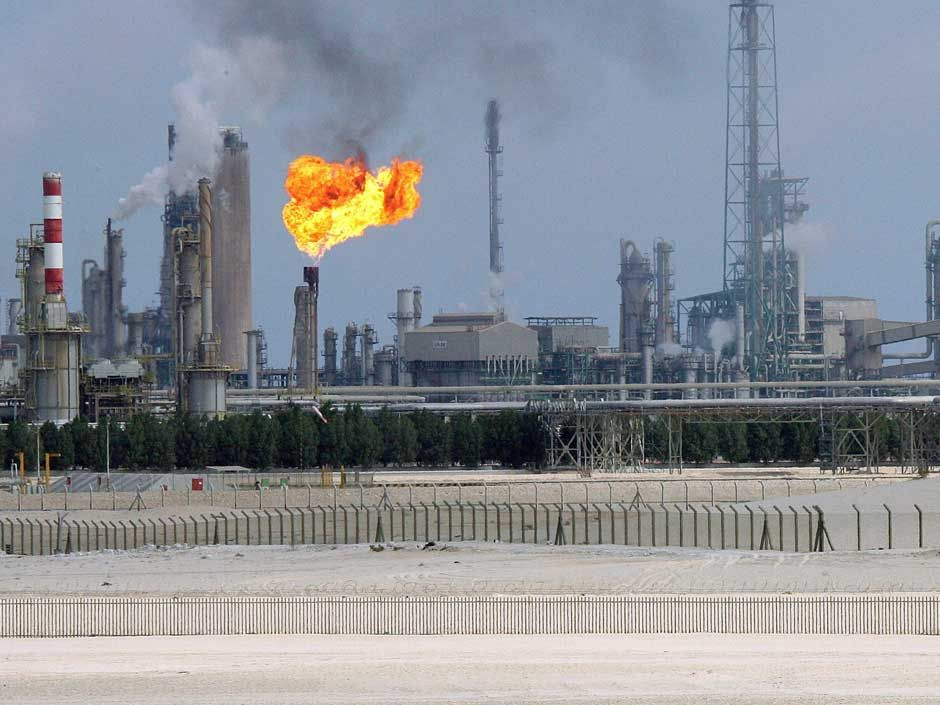
OPEC says you can forget about US$100 oil for at least the next 10 years - The 12-member oil cartel OPEC has this grim forecast in a draft report presented to its staff last week that the Wall Street Journal read
-
-
No Further Updates – Keeping site up as an archive - Edited and uploaded by Alex Jones Podcasts Hey Everyone, Sorry for the lack of updates. Life happens and time continues to change the circumstances aroun...
-
No Further Updates – Keeping site up as an archive - Edited and uploaded by Alex Jones Podcasts Hey Everyone, Sorry for the lack of updates. Life happens and time continues to change the circumstances aroun...
-
IMPORTANT: OUR WEBSITE IS CHANGING - *From: Nureddin Sabir Editor, Redress Information & Analysis* *19 September 2012* Redress Information & Analysis is changing. Some of you will have noticed...
-
Lock into debt schemes as interest rates peak - This is a good time to park funds in debt options with a medium to long-term view.
-
-
-
-
-
-
-


Thursday, May 28, 2015


Friday, January 23, 2015
Politics in Nigeria
New York Times)
(KADUNA, Nigeria)
Boisterous crowds packed the streets for the retired general, while young men climbed lampposts, walls and billboards to glimpse his gaunt face. Others danced on careening motorcycles, brandishing homemade brooms, symbols of his campaign.
With Nigeria’s presidential election only weeks away, Boko Haram’s unchecked rampaging here in the country’s north is helping to propel the 72-year-old general, Muhammadu Buhari, to the forefront.
After ruling Nigeria with an iron hand 30 years ago as the country’s military leader, Mr. Buhari is now a serious threat at the ballot box, analysts say, in large part because of Boko Haram’s blood-soaked successes.
“The state is collapsing and everybody is frightened,” Jibrin Ibrahim, a political scientist with the Center for Democracy and Development in Abuja, the Nigerian capital, said of Boko Haram.
“They are able to capture more and more territory, but also increase the level of atrocity,” he added. “A lot of people are frightened that these people can take over the whole country. So a lot of people are saying, ‘Give Buhari a chance.’ ”
A Buhari win would be a rare upset for the incumbent, President Goodluck Jonathan, in a country where petrodollars have long flowed and the presidency has great latitude to distribute them.
But oil prices have crashed; attacks on schools, markets and entire villages continue unabated; and Nigeria’s army has been thoroughly incapable of stopping Boko Haram, which now controls substantial portions of the northeast and regularly sends the country’s soldiers fleeing.
“We have to solve it; it’s the first problem of the country,” Mr. Buhari said tersely about the battle with Boko Haram during a long day of campaigning this week.
“This should have been an easy one,” added the former general, who is believed to have been a target of bombings in this city over the summer in which dozens were killed. “But it has been allowed to develop over five years.”
There is much at stake in Nigeria, Africa’s largest economy, even as it falters — the currency has dropped sharply, questions are swirling about the ability to pay civil servants and the country’s oil-money reserves have withered. The campaign has become a vociferous, at times violent, joust between Buhari partisans in the mostly Muslim north and supporters of Mr. Jonathan in the largely Christian south.
Mr. Buhari’s tenure as Nigeria’s military ruler was brief: a 20-month stint in the 1980s, ended by another military coup. Yet it is remembered with trepidation by many Nigerians. His self-proclaimed “war against indiscipline” was carried to “sadistic levels, glorying in the humiliation of a people,” wrote the Nobel laureate and writer Wole Soyinka.
The current president and his party, which has held power since military rule ended more than 15 years ago, have made this past a central part of Mr. Jonathan’s re-election strategy, hoping to fan old fears about the general.
Full-page newspaper ads suggest that Mr. Buhari is eager to introduce Shariah law all over the country, beyond the northern states where it already exists (in the campaign, Mr. Buhari has not said that).
Other ads remind readers of the retired general’s coup-prone past. (Historians say that even before Mr. Buhari came to power in a military coup at the end of 1983, he played an active role in the coups that marked Nigeria’s early years.)
But Mr. Buhari’s supporters are far more interested in the instability shaking the north, urging a total overhaul of the lackluster fight against the Islamists. Many of them turned out in this northern metropolis this week for a glimpse of the general, who has traded his medal-bedecked uniform for traditional robes and thick-framed spectacles.
Hadiza Bala Usman, the main campaigner for the return of more than 200 schoolgirls kidnapped by Boko Haram last spring, was waiting for the general at the airport here. She helped start the group that pressed the government on the fate of the girls, demonstrating for weeks in a public square in Abuja. Nine months after their abduction, the girls remain missing.
“The resources meant for the military don’t go to the military; the bullets and boots don’t go to the soldiers,” Ms. Usman said. “And what is happening to security, you see it in all the sectors.”
“The support we’re giving” to Mr. Buhari “is for ending the insurgency,” she added. “And so no more children are abducted.”
A retired general in the crowd of supporters, Alhassan Usman, who is not related to Ms. Usman, agreed, expressing anger that Boko Haram had gained the upper hand over Nigeria’s soldiers.
“The issue is lack of discipline; the commander has eaten his money,” he said, arguing that officers take money meant for soldiers, who then see little reason to obey orders.
Mr. Buhari stood as ramrod straight as he had in the days when he rose in a coup against Nigeria’s fledgling, but corrupt, democracy. After taking power, he soon instituted what he called his attempt to straighten out a chaotic nation — making tardy civil servants, even older ones, perform frog jumps, for instance, and jailing journalists for critical articles.
That tarnished past has been, if not forgotten, at least pushed aside by many in the tumultuous jumble of Nigerian history. Mr. Buhari is expected to do particularly well in the Muslim north, his home turf, on Election Day, as he did in an unsuccessful run four years ago.
Still, his campaign faces stiff obstacles. Tens of thousands of people in northern Nigeria have been displaced by relentless violence, and many of them will be unable to vote in the Feb. 14 election. Even if they can, Nigerian elections are prone to violence and fraud.
This week, the streets of Kaduna were packed three-deep with people, many waiting since early morning or trekking miles from nearby villages to see him. Partisans yelled as they climbed on the general’s vehicles, frenetically brushing windshields with the symbolic brooms.
Mr. Buhari spoke only briefly to the packed stands in a downtown stadium, vaguely promising greater security, prosperity and better education. But the words appeared not to be the point. It was his presence, and an implicit promise of austerity and military action, that the crowd seemed to want, after years of scandalous stories in the Nigerian news media about missing oil funds and high living by officials in Mr. Jonathan’s administration.
“The enthusiasm for Buhari is almost like a religion,” said Nasir el-Rufai, a former government minister running for governor of Kaduna State.
“Look at all these people,” he said, pointing at the crowds pressing up against his own car before the general arrived. “They are all waiting just to see Buhari.”
As military ruler, Mr. Buhari expelled tens of thousands of immigrants from other West African countries, blaming them for the country’s problems. His government also carried out a bizarre kidnapping plot targeting a former minister who had fled to London. It involved Israeli secret agents, giant packing crates and anesthetic drugs.
In an interview, Mr. Buhari said that the times had changed and that he had changed with them.
“I operated as a military head of state,” he said. “Now I want to operate as a partisan politician in a multiparty setup. It’s a fundamental difference. Whatever law is on the ground, I will make sure it is respected.”
Yet it is Mr. Buhari’s long military career, not the respect for civil liberties he has proclaimed later in life, that will ultimately swing voters wary of his past, analysts say.
“You’ve got the Boko Haram in the northeast, where they bomb churches and marketplaces, and slaughter children,” he said.
But he also noted the security problems in the nation’s south, where militants at oil fields have created havoc for years. “No highway in the country is absolutely safe,” Mr. Buhari said.
Though supporters insist he will knock out the Islamists “in a month,” as Mr. el-Rufai put it, the retired general is far more cautious. He spoke of a methodical approach, declining to say whether he would fire the country’s top military chiefs.
“We have to see the whole picture,” Mr. Buhari said. “We’ll ask them to brief us, one by one. Why haven’t they been performing?”
“Let them justify the use of funds,” he added. “What is the intelligence community doing? Where do they,” Boko Haram, “get weapons?”
He focused on the individual failures in confronting Boko Haram — the misspent money, the lack of weaponry for the soldiers, their lack of motivation for the fight — rather than on an overall condemnation of the army.
His jaw muscles tightening, he said: “This is not the Nigerian Army I knew.”
Thursday, January 08, 2015
O Nigerians
40 days to presidential elections. If you're voting remember these factors;
1. The Chibok girls
2. NNPC Scam
3. Police Pension Fund
4. Missing 20Billion
5. $9million Arms deal
6. Bomb Blasts
7. Immigration job scam
8. Petroleum pump price
9. Devaluation of Naira
10. Oil theft
11. Power outage
12. Selling of Power Holdings
13. Selling of Refineries
14. Skyrocketed Power Holding Bills
15. ASUU & Poly Strikes
16. Doctors Strike
17. National Assembly tragedy
19. Stella's Oduah Aviation Scam.
20. Kerosene subsidy
21. Insurgency.
22 Judiciary Strike.
23. 70% increment on used imported vehicles.
Pls vote wisely!
Thursday, December 18, 2014
NIGERIA: Prof Tam David West on Religion & Politics
Hear what Prof Tam David West has to say..on religion/politics..
Religion is a personal thing and every man has the right to choose his own, or practice it the way he likes. Most of the sycophants that use religion to defame the character of Buhari are not even practicing their acclaimed self righteousness. Many of them are occultists. They kill and conduct daily human sacrifices to remain in power. Buhari is a man of integrity and I respect him a lot. But because majority of those who have looted this country to poverty are afraid to end up in jail or loose their ill gotten wealth, they chose to fabricate lies against Buhari. They hire hungry and morally corrupted scholars to do the dirty jobs on their behalf.
It is quite unfortunate that Nigerians buy all the lies they trade through the media.
This is the only country where people prefer to believe in a hear say than make a research.
Only a minute population of Nigerians are willing to investigate an allegation before they draw conclusions.
Nigerians have resolved to be praise singers to corrupt leaders. We have failed to ask for accountability. Our conscience has been beclouded with religious and ethnic sentiments.
Our sense of judgement and reason have been blinded by poverty. We chose to mortgage our tomorrow and the future of our children for the rice and a few Naira notes they share during elections.
All we believe is the roads, the bridges, the railways, the electricity they build only on televisions.
I always ask my self these questions:
1. Where are the roads? The Abuja - Lokoja road was awarded by Obasanjo's administration. He spent 8 years in the office. Then Yaradua and Goodluck spent another 8 years. Now if Goodluck is elected, he will be spending another 8 years. This will amount to 24 years and 180 km road is yet to be completed. Enugu - Onitsha road was also awarded by the Obasanjo administration and till date, a journey that is supposed to take 45 minutes can take you 8 hours if it rains. Enugu- PH road is on the same series. What about Uyo - Calabar route? Just to mention a few.
2. Where is the power? They sold all the NEPA to their friends. We pay for the light that was not supplied.
3. Our education and health system go bad everyday. Lecturers and Health workers spent more time at home than in the schools and hospitals as a result of incessant strikes.
4. The government failed to provide us with security. People are being killed everyday and yet government comes out to tell us they are in control.
4. Why are we pretending that all is well? It is only in Nigeria where monies develop wings and fly. $20 billion oil money disappeared and they said it was $10 billion. Forensic investigators were hired and that was the end of the story. N20 billion pension fund stolen and nothing came out of it. $9.3 million seized in South Africa and government claimed it was meant for ammunition purchase. The immigration scandal has also been swept under the carpet because the senate could not proceed with their investigation. The man behind the contract is sitting among the high seats in the senate. Innocent people were defrauded and they at the same time lost their lives yet, we have a transparent governance.
5. Why are we praising government as if they are doing whatever with their personal money. How many people in their various communities have they provided scholarship with their personal money before they got elected? The reason they got elected is to manage our resources and not to loot us dry.
One thing I know is that we will not have any meaningful development except if we make a change.
Age or no age, Buhari is a better option for the present day Nigerian.
Prof Tam David West
Wednesday, December 17, 2014
POLITICS IN NIGERIA
Finally, Buhari settles for Tinubu ally, Yemi Osibajo, as running mate http://bit.ly/1vYwyqu
NIGERIA: $1 bn excess crude money “missing” as FAAC meeting ends in confusion
$1 bn excess crude money “missing” as FAAC meeting ends in confusion http://t.co/u7DtvSWwQX
Tuesday, December 16, 2014
76 Things Banned By The Bible
76 things banned in Leviticus
Here’s chapter and verse on a more-or-less comprehensive list of things banned in the Leviticus book of the bible. A decent number of them are punishable by death.
Unless you’ve never done any of them (and 54 to 56 are particularly tricky), perhaps it’s time to lay off quoting 18:22 for a while?
1. Burning any yeast or honey in offerings to God (2:11)
2. Failing to include salt in offerings to God (2:13)
3. Eating fat (3:17)
4. Eating blood (3:17)
5. Failing to testify against any wrongdoing you’ve witnessed (5:1)
6. Failing to testify against any wrongdoing you’ve been told about (5:1)
7. Touching an unclean animal (5:2)
8. Carelessly making an oath (5:4)
9. Deceiving a neighbour about something trusted to them (6:2)
10. Finding lost property and lying about it (6:3)
11. Bringing unauthorised fire before God (10:1)
12. Letting your hair become unkempt (10:6)
13. Tearing your clothes (10:6)
14. Drinking alcohol in holy places (bit of a problem for Catholics, this ‘un) (10:9)
15. Eating an animal which doesn’t both chew cud and has a divided hoof (cf: camel, rabbit, pig) (11:4-7)
16. Touching the carcass of any of the above (problems here for rugby) (11:8)
17. Eating – or touching the carcass of – any seafood without fins or scales (11:10-12)
18. Eating – or touching the carcass of - eagle, the vulture, the black vulture, the red kite, any kind of black kite, any kind of raven, the horned owl, the screech owl, the gull, any kind of hawk, the little owl, the cormorant, the great owl, the white owl, the desert owl, the osprey, the stork, any kind of heron, the hoopoe and the bat. (11:13-19)
19. Eating – or touching the carcass of – flying insects with four legs, unless those legs are jointed (11:20-22)
20. Eating any animal which walks on all four and has paws (good news for cats) (11:27)
21. Eating – or touching the carcass of – the weasel, the rat, any kind of great lizard, the gecko, the monitor lizard, the wall lizard, the skink and the chameleon (11:29)
22. Eating – or touching the carcass of – any creature which crawls on many legs, or its belly (11:41-42)
23. Going to church within 33 days after giving birth to a boy (12:4)
24. Going to church within 66 days after giving birth to a girl (12:5)
25. Having sex with your mother (18:7)
26. Having sex with your father’s wife (18:8)
27. Having sex with your sister (18:9)
28. Having sex with your granddaughter (18:10)
29. Having sex with your half-sister (18:11)
30. Having sex with your biological aunt (18:12-13)
31. Having sex with your uncle’s wife (18:14)
32. Having sex with your daughter-in-law (18:15)
33. Having sex with your sister-in-law (18:16)
34. Having sex with a woman and also having sex with her daughter or granddaughter (bad news for Alan Clark) (18:17)
35. Marrying your wife’s sister while your wife still lives (18:18)
36. Having sex with a woman during her period (18:19)
37. Having sex with your neighbour’s wife (18:20)
38. Giving your children to be sacrificed to Molek (18:21)
39. Having sex with a man “as one does with a woman” (18:22)
40. Having sex with an animal (18:23)
41. Making idols or “metal gods” (19:4)
42. Reaping to the very edges of a field (19:9)
43. Picking up grapes that have fallen in your vineyard (19:10)
44. Stealing (19:11)
45. Lying (19:11)
46. Swearing falsely on God’s name (19:12)
47. Defrauding your neighbour (19:13)
48. Holding back the wages of an employee overnight (not well observed these days) (19:13)
49. Cursing the deaf or abusing the blind (19:14)
50. Perverting justice, showing partiality to either the poor or the rich (19:15)
51. Spreading slander (19:16)
52. Doing anything to endanger a neighbour’s life (19:16)
53. Seeking revenge or bearing a grudge (19:18)
54. Mixing fabrics in clothing (19:19)
55. Cross-breeding animals (19:19)
56. Planting different seeds in the same field (19:19)
57. Sleeping with another man’s slave (19:20)
58. Eating fruit from a tree within four years of planting it (19:23)
59. Practising divination or seeking omens (tut, tut astrology) (19:26)
60. Trimming your beard (19:27)
61. Cutting your hair at the sides (19:27)
62. Getting tattoos (19:28)
63. Making your daughter prostitute herself (19:29)
64. Turning to mediums or spiritualists (19:31)
65. Not standing in the presence of the elderly (19:32)
66. Mistreating foreigners – “the foreigner residing among you must be treated as your native-born” (19:33-34)
67. Using dishonest weights and scales (19:35-36)
68. Cursing your father or mother (punishable by death) (20:9)
69. Marrying a prostitute, divorcee or widow if you are a priest (21:7,13)
70. Entering a place where there’s a dead body as a priest (21:11)
71. Slaughtering a cow/sheep and its young on the same day (22:28)
72. Working on the Sabbath (23:3)
73. Blasphemy (punishable by stoning to death) (24:14)
74. Inflicting an injury; killing someone else’s animal; killing a person must be punished in kind (24:17-22)
75. Selling land permanently (25:23)
76. Selling an Israelite as a slave (foreigners are fine) (25:42)
Monday, December 15, 2014
'Why We Could Not Defeat Boko Haram'- Army Commander Writes A Powerful Letter To President Jonathan | Sahara Reporters
'Why We Could Not Defeat Boko Haram'- Army Commander Writes A Powerful Letter To President Jonathan | Sahara Reporters http://saharareporters.com/2014/12/15/why-we-could-not-defeat-boko-haram-army-commander-writes-powerful-letter-president#.VI-N1dxNGs0.twitter
Nigeria: Boko Haram - Field Commander Writes President Jonathan of Nigeria
"Why We Could Not Defeat Boko Haram"- Army Commander Writes A Powerful Letter To President Jonathan
In a desperate letter to President Goodluck Jonathan and Senate President David Mark leaked to SaharaReporters this past weekend, a commanding officer stationed in Nigeria's northeast details several troubling issues plaguing troops combatting Islamist terror group Boko Haram in the region.
BY SAHARAREPORTERS, NEW YORKDEC 15, 2014
In a desperate letter to President Goodluck Jonathan and Senate President David Mark leaked to SaharaReporters this past weekend, a commanding officer stationed in Nigeria's northeast details several troubling issues plaguing troops combatting Islamist terror group Boko Haram in the region.
President Goodluck Jonathan
The officer stated that, corruption, maladministration, lack of resources and troops motivation has militated against a successful campaign to end Boko Haram's deadly reign of terror in the northeast.
The officer's lengthy complaint which he claims would lead to a threat to his life forewarns that if his pleas continue to be ignored by the country's leadership that both the Nigerian Army and the country will crumble under the insurgency.
"If all issues raised in this letter are not urgently addressed, the Nigerian Army will soon be history and by implication there will be no country called Nigeria," the officer gravely states. "No country without a strong army will survive."
Below is the full text of the officer's letter addressed to President Goodluck Jonathan
PLEASE MR PRESIDENT SAVE THE MILITARY AND NIGERIA FROM COLLAPSING
1. Sir, I am constrain to write you this letter which I consider it a matter of more than great importance for me to inform you and put to record issues that are happening in the North East (Operation Zaman Lafiya). I choose this medium to write you this open letter because I have written similar letter but no action was taking which I believe some forces have blocked it are now after my life. Sir I have served in 7 Division as staff officer and presently I am the commanding officer of 103Bn in the field. My combined wealth of experience as a staff officer and now commanding officer are the disturbing fact that necessitated me to write you this letter. While as a staff officer, I was among those who believed that the commanders in the field are not doing well. But presently, as a commander in the field, I found out that it is not the fault of any commander that the defeat of the so called BOKO HARAM (BH) has not been achieved.
2. First and foremost sir, the Nigerian Army is poorly equipped in the North East, if all the battalions are well-equipped as required; it will not take the Army more than two weeks to flush out the BH. Presently there are four units in my location here in KONDUGA including 21 Armoured Brigade HQ. If all the units are provided with all their requirements, we can advance and flush out BH out of North East. Mr. President sir, the Nigerian Army is well-trained and capable of defending our nation. It has demonstrated the capacity to even successfully enforce peace in other nations. Why not in our own country Nigeria?
3. The fact about NE operation is that we are poorly equipped, understaffed, high corruption from Army Headquarters down to battalion level. Commanders see it as opportunity to make money. My predecessor has complained of the same problem. Instead of ASA addressing the issue raised by him, the army authorities decided to Court Martialled him. All the units in NE are understaffed, but on payroll their strength are complete just to collect more allowances than what each unit is supposed to. The commanders see it as a personal money making venture rather than taking care of men and equipment. This ugly trend led to loss of many officers and soldiers and thereby having adverse effect on the moral (sic) of troops. Majority of soldiers in the operation area wear mufti (civil cloths) under their military uniforms in case there is an attack and the troops cannot withstand the BH, they found it easy to disguise as civilians to enable them escape. This is not the traditional practice in the NA. Though it is lack of adequate equipment and poor administration from the higher authority that resulted to this ugly trend by our troops
4. Sir, another bad and unprofessional act is that soldiers don’t take to orders from their superior officers because they have lost confidence/trust from them. The case of former General Officer Commanding 7 Division Major General A. Mohammed is enough evidence to show that all is not well in the Nigerian Army. It will interest you to note that worse cases has been recorded before that of the former GOC and more are still happening, but nobody is ready to investigate the root cause of problems facing the troops in the field.
5. This brings me to a recent occurrence which is my main purpose of writing this letter. As I mentioned earlier, due to the failure of the authority to address issues that I made mentioned, when a unit is attacked and overran by the BH not because the soldiers are unable to fight, but lack of weapons, ammunitions and communications equipment, the soldiers on many occasions will ran away, and a commander cannot stand and fight alone as a result of this. Presently seventy percent of commanders in the NE are facing Court Martial due to the reasons mentioned. We the commanding officers are very worried over this development. This is because we many soon find our self as victims of this maladministration from our higher authorities.
6. There is no sincerity in this operation; this is because the present acting GOC has never visited any location outside Maiduguri town not to talk of principal staff officers in Army Headquarters or even the COAS. But we keep on hearing all sorts of lies that Generals are leading the fight against BH. These are facts that can be confirmed from officers and soldiers in this operation including those in the 7 Division Headquarters. The GOC is so afraid that even with the Divisional Headquarters; he doesn’t go out and always locked himself inside his office. Infact it is a common knowledge among officers and soldiers in this operation that the acting GOC is here to make his money and earn his promotion to the detriment of the operation. The completion of his mansion at No 8 Gwamna Road in Kaduna which the GOC ignorantly disclosed that when he completed it, will be among the best houses in Kaduna, has turned to be a subject of discussion among troops.
7. The former 21 Armored Brigade commander is facing Court Martial today because the acting GOC does not want to see him and his garrision in Maiduguri town simply because of the huge monthly allocations from the Borno State government to the brigade garrision. He wanted to be collecting his money by using 7 Div Garrison, but in reality 7 Div Garrision does not have troops to claim such money. It is worthy to note that the GOC received 33,000litres of AGO and PMS each, 600 bags of rice monthly from Borno State government. All these items are diverted for his personal use.
8. Recently the newly appointed 21 Brigade commander lead 3 units to flush out the BH, that operation was successful, almost 300 BH were killed, weapons and vehicles were recovered from them, in the process the troops exhausted their ammunitions from the Div, the GOC simply replied that there was no ammunition this made all the troops to withdraw back to KONDUGA.
9. Presently more than 3000 officers and soldiers are either killed in action, deserted, captured as POW or on AWOL. But due to lack of proper administration the army directed that their salary should be stopped. This affect the families of those that are either genuinely killed in action or captured as Prisoners of War. It has also affected some of the troops that are still participating in this operation.
10. Mr. President sir, if all issues raised in this letter are not urgently address, the Nigerian Army will soon be history and by implication there will be no country called Nigeria. No country without strong army will survive. I decided to write you this letter because the life of officers and soldiers trusted in my care are no longer save. My life is also at the stake because the NA authority as usual will say I have communicated directly to you as the Commander in Chief of the Armed Forces and may sanction me. As a citizen of this country and a commander in the operational area, with all the points I have mentioned in this letter, it is clearly that the Military authorities have failed the country, as such they should be held liable for their misdeeds. I have consulted seasonal constitutional lawyers if writing you this letter will be an offence, but they said it is my constitutional right to inform the C in C about what is happening in the NE and within the military which if not address will affect the survival of Nigeria.
Letter from Nigerian Army commander to C-in-C
SAHARAREPORTERS, NEW YORK
Tuesday, December 09, 2014
Nigeria: What Prominent Nigerians are saying about President Jonathan
FAILED PRESIDENCY!!!
Cardinal Okojie: You will become President but will
not be the one ruling
OBJ: He performed below expectations, his
government is evil.
Prof Tam David West: Jonathan is too
inexperienced
to be president
Chief Bisi Akande: Jonathan's is a Kindergarten
Presidency
Prof. Oyebode of Unilag: He is an embarrassment
to
PhD holders.
Chief Christopher Kolade: He is a Kano dancer. He
is
not a good leader.
Prof. Wole Soyinka: He is King Nebuchadnezzar
(destroyer of Jerusalem).
Pastor Tunde Bakare: Nebuchadnezzar is too mild.
He is King Jeroboam.
Gov. Obiano: His tenure is bad. He is not the right
person for this country.
Don Jazzy: I Regret Campaigning and Voting for
Goodluck Jonathan
Lagbaja: For Electing Jonathan Nigeria is a
Country of
100 Million Mumus
If anybody Think All These People are Wrong that person
Need a mental overhaul.
Subscribe to:
Posts (Atom)